

Research update · November 2026. Bacopa, creatine, and omega-3 fatty acids are often marketed as memory enhancers. They each have scientifically interesting chemistry and some human clinical research. But does that evidence show that taking them improves recall—or exam performance—in healthy students? This article separates what the molecules do from what randomized trials actually show.
Important: This is a chemistry and research-literacy article, not a recommendation to take supplements or medical advice. An improvement on one cognitive test is not necessarily an improvement in long-term learning or college grades.
At a glance: evidence is promising in places, but mixed
| Compound | Chemistry connection | Human memory evidence |
|---|---|---|
| Bacopa monnieri | Plant triterpenoid glycosides (bacosides) | Mixed: some reviews find improvements, while a recent randomized trial found no primary cognitive benefit. |
| Creatine monohydrate | Creatine kinase / phosphocreatine energy buffer | Small average effects in some meta-analyses; not established for general cognitive improvement in healthy adults. |
| DHA and EPA | Omega-3 unsaturated lipids; membranes and signaling | Some positive pooled outcomes, but large trials in cognitively healthy older adults often show little cognitive effect. |
1. Bacopa monnieri: the chemistry of plant saponins
Bacopa monnieri is a plant traditionally used for memory. Researchers study its bacosides, a family of triterpenoid saponins: a polycyclic, non-sugar skeleton connected to sugar groups. The phrase “bacoside A” does not describe one molecule; it often refers to a mixture. The United States Pharmacopeia describes several glycosides used to characterize Bacopa preparations, including bacoside A3. [1] [2]
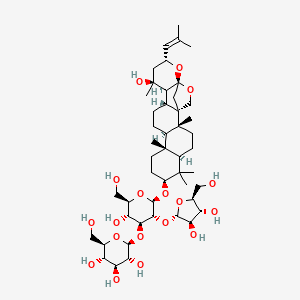
Proposed mechanism versus demonstrated benefit
Bacopa extracts have been examined for effects on cholinergic signaling, oxidative-stress pathways, and neuronal physiology. Those mechanisms are hypotheses about how constituents might act, not clinical proof that supplements will improve learning. Differences in saponin composition and extract preparation make direct comparisons especially difficult.
What do randomized human trials show?
A 2026 network meta-analysis synthesized 29 randomized controlled trials involving 2,107 participants. It reported improvements for some working-, short-, and delayed-memory comparisons using Bacopa preparations, but not consistent effects on attention or processing speed. Crucially, comparisons between Bacopa and Ginkgo were indirect, and extract formulations varied. [3]
A separate 12-week, double-blind, placebo-controlled trial published in 2025 randomized 101 adults ages 40–70 to Bacopa extract or placebo. The trial did not show between-group improvement in its primary verbal-learning, attention, or working-memory measures. Some secondary stress and fatigue measures improved. Participants in the Bacopa group reported more gastrointestinal complaints and headaches. [4]
Teaching takeaway: Promising pooled results and a well-controlled null trial can both be true. Neither justifies describing Bacopa as a reliable short-term study aid, and formulation-dependent results should not become dose advice.
2. Creatine monohydrate: brain energy and the ATP connection
Creatine (C4H9N3O2; 131.13 g/mol) is a small nitrogen-containing compound. Creatine monohydrate contains one additional water molecule per creatine unit: C4H9N3O2·H2O. Its structure includes a carboxylic acid group and a guanidino-derived nitrogen-rich portion. [5]
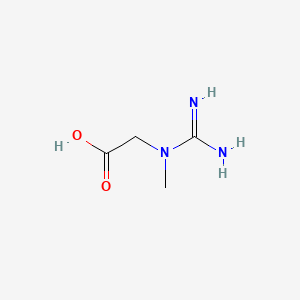
The chemical reaction
The brain needs a continuous ATP supply. Creatine kinase catalyzes a reversible phosphoryl-group transfer, helping buffer short-term changes in cellular energy demand:
Simplified creatine kinase energy-buffer reaction
This biochemical role is well established. Whether supplying extra creatine leads to a meaningful cognitive improvement is a different question.
What does the clinical evidence show?
A 2024 meta-analysis included 16 randomized trials and 492 participants. It reported a small average memory-test benefit (standardized mean difference approximately 0.31) but no significant improvement in overall cognition or executive function. Results involved participants of differing ages and health statuses. [6]
Another review focused on healthy individuals found a more apparent memory signal in older adults and little evidence of benefit among younger participants. [7] In its 2024 assessment, the European Food Safety Authority concluded that a cause-and-effect relationship between creatine supplementation and improved cognitive function had not been established. [8]
Teaching takeaway: Creatine offers a useful example of phosphoryl transfer and ATP homeostasis. It is not established as a way to raise college exam scores. People with kidney disease or other medical conditions should consult a qualified health professional before considering supplements.
3. Omega-3 fatty acids: DHA, EPA, and cell membranes
Two important long-chain omega-3 fatty acids are docosahexaenoic acid (DHA) and eicosapentaenoic acid (EPA). DHA has 22 carbons and six cis double bonds (22:6 n-3); EPA has 20 carbons and five cis double bonds (20:5 n-3). Their bent, unsaturated chains differ structurally from saturated fatty acids. [9] [10]
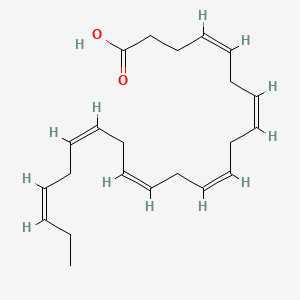
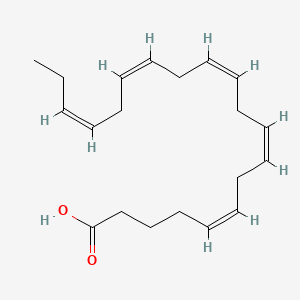
Why does the brain use these lipids?
DHA is an important constituent of neuronal membrane phospholipids. Its chain structure influences membrane packing and the environment of membrane proteins; EPA also participates in signaling-related lipid metabolism. The NIH Office of Dietary Supplements reviews how this biology motivates cognition research. But membrane importance does not prove an additional supplement improves memory. [11]
What do omega-3 memory trials show?
A 2025 systematic review and dose-response meta-analysis covering 58 randomized trials reported possible improvements in selected cognitive measures, including some forms of memory, with differing levels of evidence certainty. The authors called for stronger long-term trials. [12]
Meanwhile, large trials summarized by the NIH found no consistent cognitive benefit of omega-3 supplementation in cognitively healthy older adults. Some smaller trials involving mild cognitive impairment have produced signals of benefit, but those observations need confirmation. Study populations, baseline nutrition, testing methods, and intervention durations all influence results. [11]
Safety: Omega-3 supplements can cause gastrointestinal symptoms. Some high-dose regimens have been linked to increased atrial fibrillation risk in certain populations, and people taking anticoagulant medications should discuss supplementation with their clinicians. These findings do not establish a memory-enhancing dose. [11]
How should students judge a supplement study?
- Who was studied? Older adults, patients with cognitive impairment, and healthy students are not interchangeable.
- What was measured? Attention, delayed recall, working memory, reaction time, and exam performance are different outcomes.
- Was it placebo controlled? Randomization and blinding reduce—but do not eliminate—bias.
- Was the supplement well characterized? Botanical extracts, monohydrate preparations, and DHA/EPA ratios vary.
- Did the improvement replicate? One statistically significant finding is not a general guarantee.
What has stronger evidence for studying?
For retaining chemistry concepts, spaced retrieval practice is a directly studied learning strategy: close the notes, reconstruct an idea, solve a problem from memory, correct mistakes, and repeat the process on later days. Controlled learning research finds that spaced retrieval with varied cues can improve later recall. [13]
A simple chemistry routine: (1) learn a concept, (2) work a problem without notes, (3) explain any error, (4) return to a different example the next day, and (5) retrieve the concept again later in the week. See How Many Hours Should You Study Chemistry? for a practical planning guide.
Three quick chemistry checks
Is bacoside A a single molecule?
No. The name frequently refers to a mixture of triterpenoid glycosides; bacoside A3 is an individual representative compound.
What does creatine kinase do?
It catalyzes a reversible phosphoryl transfer between phosphocreatine and ADP, supporting ATP regeneration when cellular demand changes.
What is the structural difference between DHA and EPA?
DHA is a 22-carbon fatty acid with six double bonds; EPA has 20 carbons and five double bonds. Both are omega-3 polyunsaturated fatty acids.
Conclusion
Bacopa, creatine, and omega-3s are valuable chemistry case studies, not guaranteed memory boosters. Some randomized studies suggest improvements in selected cognitive measures, but results are mixed and cannot be assumed to apply to students or to academic achievement. Understand the molecules, compare clinical designs, and distinguish proposed mechanisms from outcomes.
For related research on other compounds, read The Chemistry of Focus and Memory: Alpha-GPC, L-Theanine, L-Tyrosine & Caffeine. Explore more articles in Supplements & Brain Chemistry.
Editorial disclosure: This is educational content, not personalized medical advice or a commercial recommendation. No supplement purchase or affiliate links are included. The molecular depictions are credited to PubChem rather than presented as original experimental data.
Scientific references
- United States Pharmacopeia. Bacopa monograph (2017): defining triterpene glycosides in Bacopa.
- PubChem, Bacoside A3, CID 91827005 (molecular structure and formula).
- Tiemtad P, et al. Bacopa vs Ginkgo cognition network meta-analysis. Phytomedicine (2026);153:157915.
- Bacopa monnieri Extract (Bacumen) on Cognition, Stress, and Fatigue in Healthy Adults: randomized trial (2025), PMID 41091332.
- PubChem, Creatine, CID 586; Creatine Monohydrate, CID 80116.
- Xu C, et al. Creatine supplementation and cognitive function: systematic review/meta-analysis. Frontiers in Nutrition (2024);11:1424972.
- Creatine supplementation and memory in healthy individuals: systematic review/meta-analysis. Nutrition Reviews (2023).
- EFSA. Creatine and improvement in cognitive function: evaluation of a health claim. EFSA Journal (2024).
- PubChem, DHA, CID 445580 (structure and molecular formula).
- PubChem, EPA, CID 446284 (structure and molecular formula).
- NIH Office of Dietary Supplements. Omega-3 Fatty Acids: Health Professional Fact Sheet (updated 2025).
- Shahinfar H, et al. Omega-3 supplementation on cognitive function: systematic review/dose-response meta-analysis. Scientific Reports (2025);15:30610.
- Butowska-Buczyńska E, et al. The role of variable retrieval in effective learning. PNAS (2024);121(44):e2413511121.