
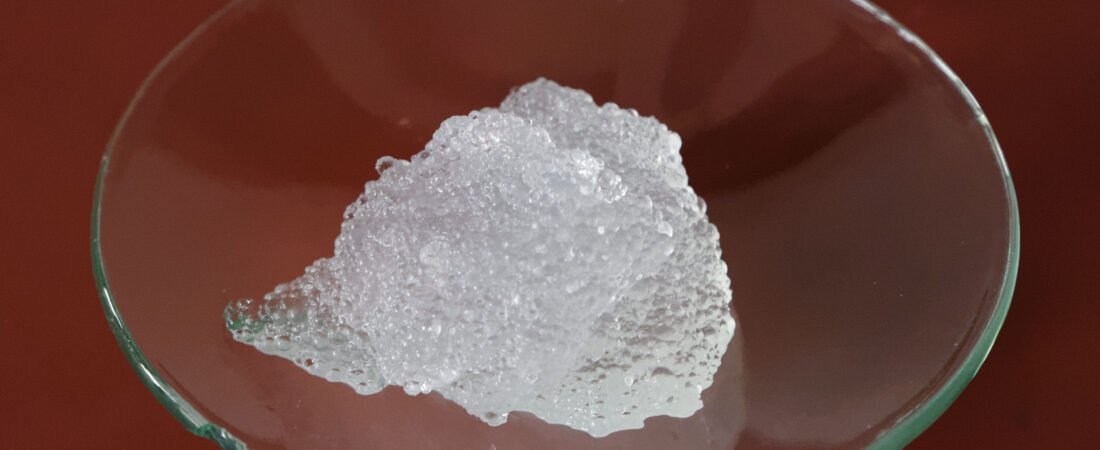
What if a material could shrink when heated, swell when its surroundings become more basic, or change shape after being warmed? Smart polymers make those responses possible—not through computers or sensors, but through molecular structure, equilibria, and changes in polymer–solvent interactions.
A smart polymer, also called a stimuli-responsive polymer, undergoes a useful change in properties when a specified environmental condition changes. Temperature, pH, light, ionic strength, chemical signals, and mechanical damage are among the many possible stimuli. Researchers have developed materials that alter swelling, permeability, adhesion, stiffness, optical properties, or shape in response. See the reviews by Cohen Stuart and colleagues (2010) and Balcerak-Woźniak and colleagues (2024).
This college-level guide connects smart polymers to acid–base equilibrium, thermodynamics, kinetics, structure–property relationships, and real studies from scientific journals.
Learning objectives
- Define stimuli-responsive polymers and distinguish a responsive gel from an ordinary absorbent material.
- Explain why poly(N-isopropylacrylamide), or PNIPAM, commonly changes hydration near 32 °C in water.
- Use weak-acid ionization to predict pH-dependent swelling.
- Relate crosslink density and diffusion to mechanical strength and response rate.
- Describe evidence from journal articles on microfluidic valves, shape-memory polymers, and self-healing composites.
- Calculate mass swelling ratio, absorbed-water percentage, and water mass fraction.
What makes a polymer smart?
Polymers consist of long macromolecular chains made from repeating structural units. Those chains can be arranged as linear chains, branched molecules, or crosslinked networks. Most everyday plastics are chosen for properties that remain relatively stable in normal conditions. A stimuli-responsive system is designed to change a measurable property when its environment changes.
For instance, a polymer network might carry ionizable acid groups. Changing the solution pH changes the charge on those groups, which in turn changes the network’s interaction with surrounding water. Another network might contain switching segments that undergo a thermal transition, allowing a material to recover a previously programmed shape.
Important distinction: not every polymer that absorbs water is specifically engineered to switch in response to a selected stimulus. Superabsorbent gels are a useful illustration of water uptake, but dramatic swelling alone does not prove a particular smart-polymer mechanism.
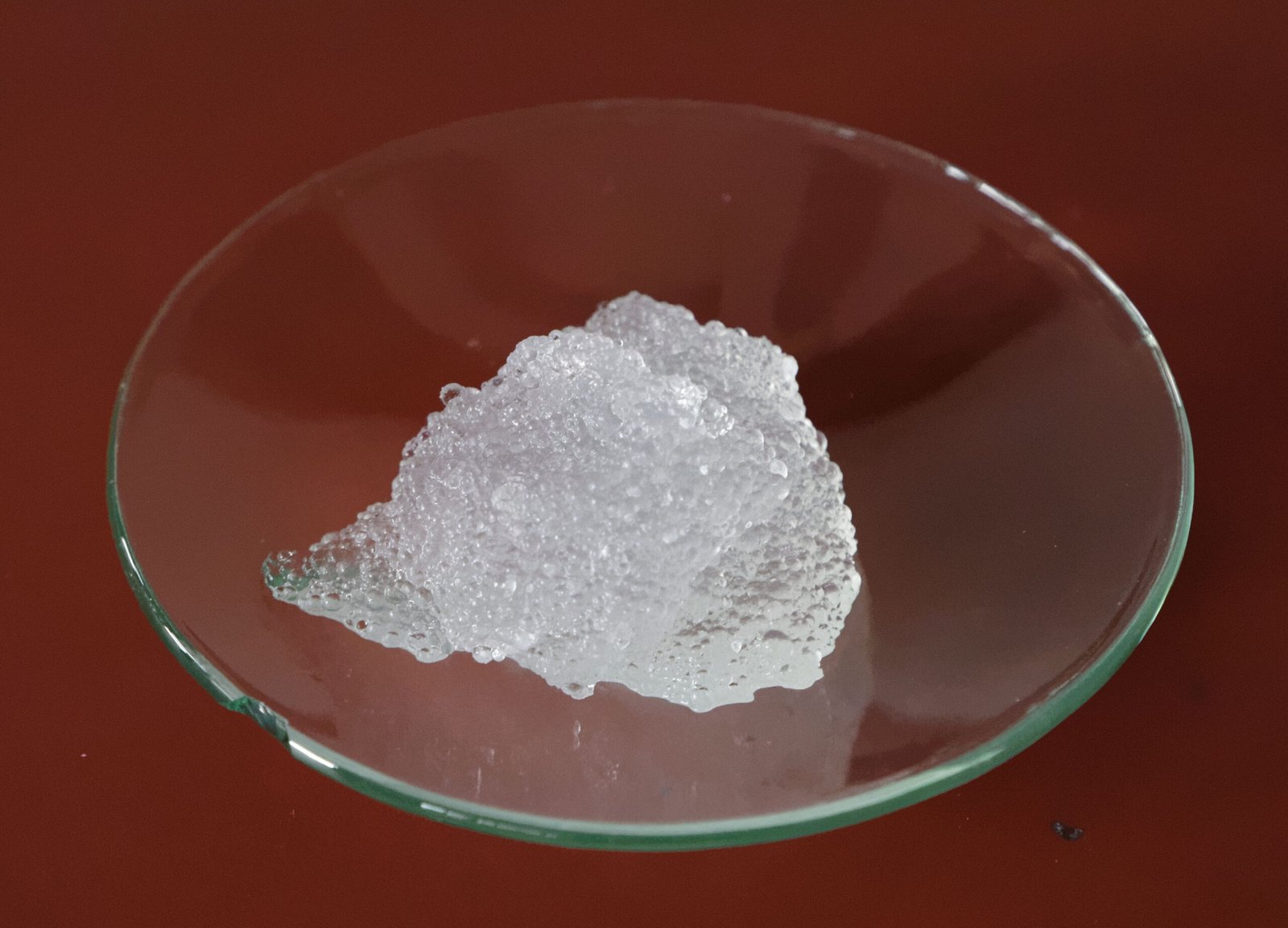

Four major kinds of stimuli-responsive polymer behavior
| Trigger | Underlying molecular change | Example material response |
|---|---|---|
| Temperature | Hydration and polymer–polymer association change | PNIPAM chain collapse or hydrogel deswelling |
| pH | Protonation changes fixed charge and counterion behavior | Ionizable gel expands or contracts |
| Light | Photoisomerization, photothermal heating, or photochemical reactions | Changes in shape, permeability, or adhesion |
| Chemical / biological signal | Binding, redox chemistry, or enzyme-driven cleavage | Changes in cargo release or material integrity |
Temperature-responsive polymers: why PNIPAM changes in water
A classic example is poly(N-isopropylacrylamide) (PNIPAM). Its repeating structure combines a polar amide group with a hydrophobic isopropyl group. Whether the chains prefer to associate with water or with one another changes with temperature.
Aqueous PNIPAM often exhibits a lower critical solution temperature (LCST) near 32 °C. Below the transition, suitable PNIPAM solutions and gels tend to be more hydrated. Above it, a coil-to-globule transition and/or deswelling can occur as the effective balance of polymer–water and polymer–polymer interactions changes. In a crosslinked hydrogel, the volume-phase transition need not occur at exactly the same temperature as the cloud point measured for a free polymer solution.
That approximately 32 °C value is not a universal constant. Copolymer composition, salt concentration, molecular architecture, concentration, and measurement conditions all affect observed behavior. A 2025 review in Gels describes PNIPAM design and biomedical research applications.
The thermodynamics behind apparent shrinking
Ordinary thermal expansion is not the dominant story. The hydrated state reflects competing free-energy contributions from polymer–solvent mixing and network elasticity. Heating changes that balance. A crosslinked network can expel water and contract without polymer chains being chemically destroyed.
If the material is designed for reversibility, cooling can restore hydration. How quickly and completely it recovers depends on network structure and experimental conditions. Yoshida and colleagues demonstrated in a 1995 Nature paper that changing the architecture of responsive hydrogel networks could greatly improve deswelling speed.
pH-responsive polymers: acid–base chemistry in a hydrogel
Suppose a crosslinked gel contains pendant weak-acid groups, as in poly(acrylic acid). The simplified acid–base equilibrium is:
–COOH ⇌ –COO− + H+
At lower pH, more sites are protonated and electrically neutral. At higher pH, more sites become negatively charged. These fixed charges can increase repulsion within the network and change the distribution of mobile counterions, favoring additional water uptake in many weak-acid gels.
For a simplified weak-acid equilibrium, [A−]/[HA] = 10(pH − pKa). One pH unit above pKa corresponds to an approximate deprotonated-to-protonated ratio of 10:1. Actual polymer networks can deviate from the isolated-molecule model because neighboring groups interact and effective acid dissociation behavior changes.
A prediction that higher pH increases swelling is often reasonable for weak-acid networks, but not for every responsive polymer. Salt can screen electrostatic repulsion; crosslinks constrain expansion; and a weak-base polymer can show a different pH response. To practice the relevant equilibrium chemistry, visit our buffers and Henderson–Hasselbalch guide.
Shape-memory polymers: returning to a programmed shape
A shape-memory polymer is designed with a permanent network structure and switching segments. When the material is appropriately programmed, it can be deformed into a temporary shape, fixed there, and later triggered to recover toward its original shape.
In many thermally activated materials, the relevant switch involves a glass transition or a melting-related transition. Heating ordinary plastic does not automatically confer shape-memory behavior; architecture and a programming process matter.
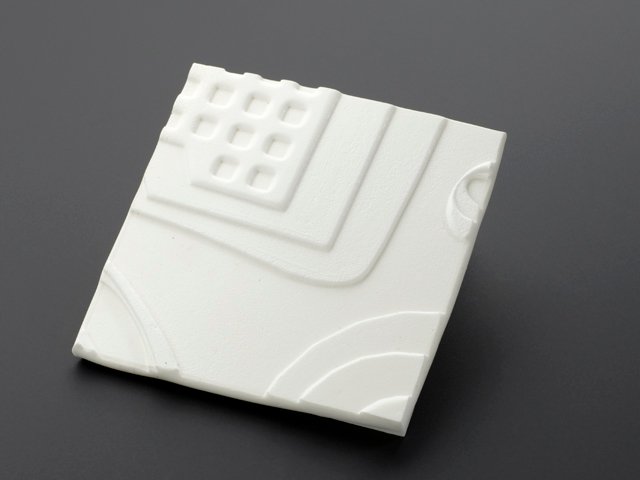

Lendlein and Langer demonstrated degradable shape-memory thermoplastics, including an experimental suture concept, in a 2002 Science paper. This is valuable proof-of-concept evidence—not a claim that every shape-memory polymer device is clinically approved.
Self-healing polymers: a response to damage
Some engineered polymer composites can respond to cracking. In one influential approach, microcapsules containing a healing agent are dispersed within a composite. Cracking ruptures capsules; the released agent meets an embedded catalyst and polymerizes, joining the damaged faces.
White and colleagues reported up to 75% recovery in fracture toughness under their experimental conditions in a 2001 Nature study. That result does not mean that the material always returns to its full original strength or can heal indefinitely. Capsule-based systems may exhaust their local supply of repair material. Other self-healing designs rely on reversible bonding or exchange reactions.
What has journal research actually demonstrated?
| Application | Published result | Research caveat |
|---|---|---|
| Microfluidic valves | Beebe et al. (2000) created responsive hydrogel structures that controlled liquid flow in tiny channels; some devices responded in less than 10 seconds. | This was a particular microscale device, not a general hydrogel response time. |
| Drug-delivery systems | Mura et al. (2013) reviewed carriers designed to respond to pH, light, temperature, redox conditions, and other inputs. | Many approaches require additional biological testing before clinical use. |
| Shape-memory materials | Lendlein and Langer (2002) demonstrated temperature-triggered shape recovery in degradable polymer designs. | A research demonstration does not establish routine clinical availability. |
| Autonomic damage repair | White et al. (2001) used microcapsules and a catalyst to repair cracks in a composite. | Recovery depends on conditions, damage, and finite healing agent. |
A central research challenge is moving from a compelling laboratory demonstration to reliable performance under realistic conditions. A drug carrier responsive to pH, for example, must also be safe, stable in storage, reach the intended location, and release an appropriate dose. A 2013 Nature Materials review evaluates stimuli-responsive nanocarriers and their design principles without implying that all concepts are established clinical therapies.
Why are response speed and mechanical properties so important?
The material may sense a change in its environment quickly but still respond physically over seconds, minutes, or longer. In swollen polymer networks, water must diffuse in or out. Shorter transport paths often speed the response, which is one reason microgels and thin films are attractive.
Crosslinking also creates a design trade-off. Greater crosslink density can help a network retain its integrity, yet constrain its maximum swelling. Softer, highly swollen networks may be mechanically fragile. Improving responsiveness therefore requires balancing transport, elasticity, fatigue resistance, and selectivity.
For college chemistry students, this is a direct connection between thermodynamic equilibrium (the final state) and kinetics (the rate at which the system approaches it). Review the related ideas in our equilibrium and reaction-rate study guides.
Worked example: how much water has a polymer absorbed?
Problem. A dry hydrogel has mass 0.250 g. After equilibrium swelling and removal of superficial liquid, it weighs 1.75 g. Calculate the absorbed-water mass, mass swelling ratio, water uptake per gram of dry polymer, and water mass percentage. These are illustrative values, not published experimental results.
Step 1: absorbed water mass
mwater = 1.75 g − 0.250 g = 1.50 g.
Step 2: mass swelling ratio
Define Qm = mswollen/mdry. Then Qm = 1.75/0.250 = 7.00. The hydrated material has seven times the dry mass.
Step 3: mass uptake relative to dry polymer
Define S = (mswollen − mdry)/mdry. Here, S = 1.50/0.250 = 6.00 g/g, equivalent to 600% water uptake by dry mass.
Step 4: water mass fraction
Water mass fraction = 1.50/1.75 = 0.857, so 85.7% of the swollen mass is water.
Researchers do not all use the same definition of “swelling ratio.” Check the equation and units reported in an article before comparing results from different studies.
Practice questions for college chemistry
- 1. A weak-acid hydrogel has more –COOH than –COO− groups at low pH. Why might raising the pH increase swelling in a low-salt solution?
- 2. A PNIPAM gel has a transition near 32 °C under specified conditions. Predict its relative hydration at 20 °C and 37 °C. Why must you verify the transition for that exact material?
- 3. A gel weighs 0.400 g dry and 2.00 g swollen. Calculate the mass swelling ratio, water uptake per gram of dry polymer, and percentage water by swollen mass.
- 4. A polymer composite recovers 70% of its original toughness after a crack-healing event. Does this prove it can heal indefinitely after repeated damage? Explain.
Practice answer key
- 1. Deprotonation produces more negatively charged –COO− groups; electrostatic and counterion osmotic effects can favor water uptake. Crosslinking and salt concentration influence the result.
- 2. At 20 °C, a suitably formulated sample is generally more hydrated; at 37 °C, it may deswell or collapse. Composition, salts, concentration, and network architecture can shift the transition.
- 3. Absorbed water = 1.60 g; Qm = 2.00/0.400 = 5.00; dry-mass water uptake = 1.60/0.400 = 4.00 g/g; water percentage = (1.60/2.00) × 100 = 80.0%.
- 4. No. One recovery value does not establish repeated-cycle durability, especially for systems with finite healing-agent reservoirs.
Future challenges for smart-polymer technology
Responsive polymers offer promising ways to control transport, movement, and chemistry. But their usefulness depends on factors beyond triggering a visible response: biocompatibility, stability, repeatability, production costs, end-of-life handling, and material safety all matter. “Smart” is a description of designed environmental responsiveness, not a guarantee of commercial readiness or sustainability.
The most useful question to ask about any material is: What molecular interaction changes, what measurable property follows, and how reproducible is the relationship?
Peer-reviewed journal references
- Cohen Stuart, M. A., Huck, W. T. S., Genzer, J., et al. (2010). “Emerging applications of stimuli-responsive polymer materials.” Nature Materials, 9, 101–113. DOI: 10.1038/nmat2614.
- Balcerak-Woźniak, A., Dzwonkowska-Zarzycka, M., & Kabatc-Borcz, J. (2024). “A Comprehensive Review of Stimuli-Responsive Smart Polymer Materials—Recent Advances and Future Perspectives.” Materials, 17, 4255. DOI: 10.3390/ma17174255.
- Narayana, S., Gowda, B. H. J., Hani, U., et al. (2025). “Smart Poly(N-isopropylacrylamide)-Based Hydrogels: A Tour D’horizon of Biomedical Applications.” Gels, 11, 207. DOI: 10.3390/gels11030207.
- Yoshida, R., Uchida, K., Kaneko, Y., et al. (1995). “Comb-type grafted hydrogels with rapid deswelling response to temperature changes.” Nature, 374, 240–242. DOI: 10.1038/374240a0.
- Beebe, D. J., Moore, J. S., Bauer, J. M., et al. (2000). “Functional hydrogel structures for autonomous flow control inside microfluidic channels.” Nature, 404, 588–590. DOI: 10.1038/35007047.
- Mura, S., Nicolas, J., & Couvreur, P. (2013). “Stimuli-responsive nanocarriers for drug delivery.” Nature Materials, 12, 991–1003. DOI: 10.1038/nmat3776.
- Lendlein, A., & Langer, R. (2002). “Biodegradable, elastic shape-memory polymers for potential biomedical applications.” Science, 296, 1673–1676. DOI: 10.1126/science.1066102.
- White, S. R., Sottos, N. R., Geubelle, P. H., et al. (2001). “Autonomic healing of polymer composites.” Nature, 409, 794–797. DOI: 10.1038/35057232.
The papers above are cited by DOI so that readers can locate the original studies or reviews. Some journals require institutional access to read the full text, while others provide open-access versions.