
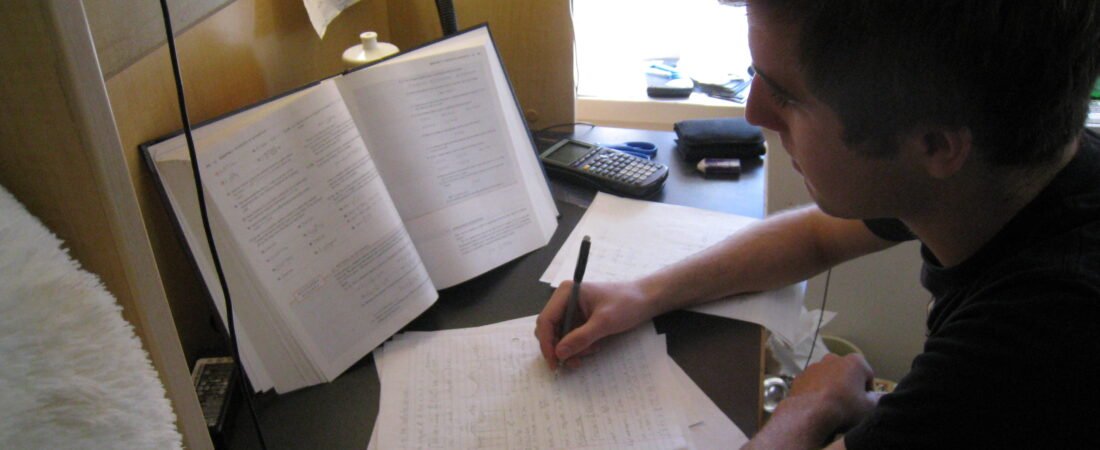
Study chemistry with a plan—not just a pile of flashcards.
Focus on General Chemistry I–II and Organic Chemistry I–II, then practice applying those concepts to unfamiliar experimental data. This guide includes a four-week schedule, a worked study routine, and a link to 50 new free questions.
Scope: This article intentionally focuses on General and Organic Chemistry. The actual MCAT also assesses physics, biology, biochemistry, psychology, sociology, and critical analysis. A chemistry-only resource is a supplement—not complete MCAT preparation. The official AAMC content outline is the authoritative scope reference [1].
1. Know the chemistry before testing your speed
The MCAT rewards chemical reasoning, not merely remembering definitions. For example, an unfamiliar laboratory passage can test equilibrium, molecular polarity, and measurement uncertainty in one set of questions. Start with the AAMC topic outline, use one diagnostic practice set to find gaps, then choose targeted review activities [2].
General Chemistry I–II
- Atoms and bonding: isotopes, electron structure, periodic trends, Lewis structures, formal charge, geometry, intermolecular forces.
- Quantitative chemistry: stoichiometry, limiting reactants, yield, concentrations, gas laws, colligative properties.
- Energy and rates: calorimetry, enthalpy, entropy, Gibbs free energy, kinetics and rate laws.
- Equilibria and solutions: Q vs K, buffers, pH, weak acids, titrations, Ksp, common ions.
- Redox: oxidation states, galvanic cells, electrolysis, Nernst equation.
Organic Chemistry I–II
- Structure: functional groups, resonance, acidity/basicity, nomenclature, stereoisomers, conformations.
- Mechanisms: substitution, elimination, nucleophilic/electrophilic steps, reaction conditions and stereochemistry.
- Reactions: alkenes, alkynes, alcohols, ethers, carbonyl chemistry, acyl substitutions and oxidation/reduction.
- Synthesis and analysis: aromatic reactivity, aldol chemistry, IR, NMR, mass spectrometry, TLC, chromatography and extraction.
- Lab reasoning: yields, purity, data interpretation, controls and identifying a product using multiple measurements.
2. A realistic four-week chemistry study plan
Use this as a chemistry supplement within your larger MCAT schedule. Increase or decrease the daily workload according to your baseline knowledge and your test date. The AAMC recommends building the plan around diagnostic evidence and your available time [2].
| Week | Core concepts | How to practice | Deliverable |
|---|---|---|---|
| 1 | Atomic/bonding models, moles, solutions, organic structure, resonance, acid/base reasoning | Mixed calculations with units; rank stability/acidity; hand-draw structures | One-page formula and structure sheet made from memory |
| 2 | Equilibrium, buffers, solubility, kinetics; substitution/elimination and stereochemistry | Interpret pH and initial-rate data; predict mechanisms using substrate/reagent/solvent | Write error explanations for at least 10 missed or uncertain problems |
| 3 | Thermodynamics, electrochemistry, carbonyl chemistry, oxidation/reduction, spectroscopy | Timed calculations; multistep reactions; compare IR/NMR signals to structures | Complete one mixed, timed chemistry practice block |
| 4 | Interleaved review of weaknesses; experimental reading and data interpretation | Take the 50-question free practice set in one sitting; review every error | Retest low-confidence topics using new problems and official AAMC practice |
3. The study cycle that actually reveals weaknesses
- Retrieve first (5–10 minutes): Before opening notes, write the relevant definitions, reaction patterns, or equations from memory. A blank sheet quickly reveals what you cannot yet recall.
- Learn or refresh (15–25 minutes): Read a focused lesson, then explain why the chemistry behaves as it does. For organic reactions, draw the electron flow rather than memorizing only a product arrow.
- Solve unfamiliar problems (20–30 minutes): Practice without a solution in sight. Show units and assumptions. If a graph or table is provided, describe what it establishes before calculating.
- Analyze the mistake (10–15 minutes): Label the issue: concept gap, wrong equation, algebra/unit error, graph interpretation, or rushing. Write the principle that would have prevented it.
- Return after a delay: Retry a related but new question after one day and again several days later. Correctly recognizing an answer immediately after reading its solution is not the same as durable recall.
Mix related topics once you have learned them individually. For example, alternate between buffer calculations and solubility equilibria, or distinguish SN2 from E2 under different reaction conditions. This forces you to decide which chemical model applies rather than relying on chapter headings.
4. Use time limits and error analysis intelligently
The real MCAT Chemical and Physical Foundations section contains 59 questions in 95 minutes; it covers more than chemistry alone. Our 50-question free set is a chemistry-only practice block, not a scaled-score predictor or a timed official section [3].
Suggested practice target: 75–80 minutes for the 50-question set. This gives a realistic pace for working through both passage questions and independent items. The value is in detailed review afterward, not speed alone. The actual MCAT does not permit a calculator, so practice estimation, powers of ten, logarithms and unit conversion.
| Error category | Example | Corrective practice |
|---|---|---|
| Content gap | Forgot why a weak-acid equivalence point is basic | Review the conjugate base and redraw the titration species |
| Model selection | Used an SN1 rationale for a primary bromide | Make a substrate/nucleophile/solvent decision table |
| Calculation | Wrong particle factor in a freezing-point problem | Write species and units before substituting numbers |
| Experiment | Misread a chromatography peak or control | State what each measurement actually distinguishes |
| Timing | Overinvested time in one low-confidence item | Practice making a justified best choice and moving on |
5. Free resources you should actually use
- AAMC content outline: Official topics and skills—your reference for what the exam can cover [1].
- AAMC study planning: Create your MCAT study plan—diagnose strengths and weaknesses first [2].
- AAMC free practice: Sample tests, an official question guide, and other resources [4].
- IntoChemistry: Stoichiometry, Q vs K and ICE tables, Buffers, Mechanism decisions, and IR spectroscopy.
6. Frequently asked questions
Are General and Organic Chemistry enough for the full MCAT?
No. They are important components, but the exam also tests other science disciplines and critical-analysis skills. Use this study guide for the chemistry portion of a broader preparation program.
Should I memorize every organic reaction?
Learn the underlying patterns first: nucleophile/electrophile, acid/base, leaving-group quality, substrate structure, stereochemistry, and reaction conditions. Then practice applying those principles to reactions you have not seen word-for-word.
Do I need a calculator for the practice set?
No. The numerical values were selected for estimation or arithmetic appropriate for calculator-free practice. You may show written work on paper.
How do I know what to study after the 50 questions?
Record both incorrect answers and correct-but-guessed answers. Group them by General or Organic Chemistry topic. Re-study those principles, then attempt fresh problems rather than immediately repeating the same answer choices.
Ready for 50 new practice problems?
25 General Chemistry questions, 25 Organic Chemistry questions, six original laboratory-style passages, and explanations available only after you choose to reveal them.
References and editorial notes
- Association of American Medical Colleges (AAMC). What’s on the MCAT Exam? Official content outline.
- AAMC. Creating Your MCAT Exam Study Plan.
- AAMC. Chemical and Physical Foundations of Biological Systems—Section Overview.
- AAMC. Free Planning and Study Resources.
Original educational content © 2026 IntoChemistry. Independently developed, unofficial chemistry practice and commentary. MCAT® is a trademark of the Association of American Medical Colleges; IntoChemistry is not affiliated with, reviewed by, or endorsed by AAMC. Last reviewed November 2026.