INTOCHEMISTRY / CHEMISTRY BLOG
The Chemistry Blog
Choose between two clearly separated collections: Study & Memory for learning science, or Chemistry Articles for reactions, lab work, materials, and discoveries.
Study by Course · Browse Lessons · Chemistry Blog · Free Worksheets
What would you like to read?
Choose a collection. Only its articles will appear below; switch anytime without scrolling past the other collection.
You can also open the full Chemistry Articles archive or Study & Memory archive.
INTOCHEMISTRY / STUDY & MEMORY
Study & Memory
Find science-informed study methods, memory aids and thoughtful explanations of the chemistry behind attention and cognition. Browse a topic below or choose an article directly—without scrolling through the Chemistry Articles collection.
 Evidence-based strategiesHow to StudyStudy time, active recall, spaced practice and smarter problem-solving.Browse topic →
 Understand retentionMemory AidsRecall, mnemonics and the science of making learning stick.Browse topic →
 Molecules & human evidenceSupplements & Brain ChemistryResearch on focus, neurochemistry and supplements—benefits, limits and safety.Browse topic →
What the evidence means: Memory and cognition articles explain both positive and null studies; no compound is a guaranteed way to improve learning or exam performance.
RECENT READING
Latest Study & Memory Articles
Choose an illustrated article below. New posts in this collection will appear automatically.
-

Exercise and Memory: How to Make Movement Work for Better Learning
Can exercise strengthen memory and learning? A research-backed guide to exercise timing, the hippocampus, BDNF, real study results, a 7-day plan and chemistry practice.
-

Why Cramming Fails: The Science of Memory, Spaced Repetition, and Smarter Studying
Learn why cramming feels effective, how spaced repetition and retrieval practice improve long-term learning, and how to use a seven-day chemistry study plan.
-
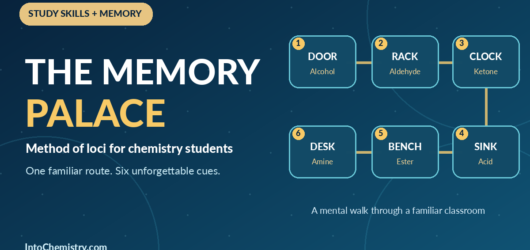
Memory Palace Technique: How to Use It to Study Chemistry
Learn how to build a memory palace for chemistry with a six-stop functional group example, practice plan, and research on the method of loci.
-
How to Study for MCAT Chemistry: General & Organic Chemistry Guide
A practical MCAT chemistry study guide focused on General and Organic Chemistry: topic checklist, four-week plan, retrieval practice, timing, and 50 free original questions.
-
The Chemistry of Memory: Bacopa, Creatine, and Omega-3 Fatty Acids
Can Bacopa, creatine, DHA and EPA improve memory? Explore molecular structures, ATP chemistry, brain lipids, randomized trials, safety, and peer-reviewed scientific references.
-
The Chemistry of Focus and Memory: Alpha-GPC, L-Theanine, L-Tyrosine & Caffeine
Explore the original molecular structures and brain chemistry of alpha-GPC, L-theanine, L-tyrosine and caffeine—and what human research actually shows about attention, memory and studying.
-
How Many Hours Should You Study Chemistry? A Guide by Credit Hours, Topic, and Study Method
How many hours should you study chemistry per week? Plan by semester credits, course topics, labs and evidence-based practice methods.
Photo credits: Gnarlycraig (public domain); Vinayaraj (CC BY-SA 3.0), with license terms. Original focus illustration: IntoChemistry. Photos cropped or resized for the displayed thumbnails.


Chemistry Articles & Discoveries
Explore original articles about chemistry, laboratory techniques, reactions, materials, spectroscopy, and scientific discoveries. Study methods, memory topics, and supplement discussions appear only in the separate collection above.
Browse by topic: All Chemistry Articles · General Chemistry · Organic Chemistry · Materials Chemistry
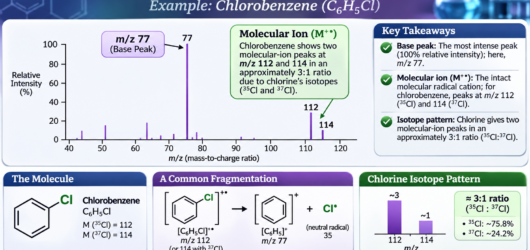
How to Read a Mass Spectrum: Molecular Ion, Base Peak, and Isotope Patterns
Learn a five-step method for electron-ionization mass spectra with original worked examples: acetone, toluene, chlorine, bromine, and dichloromethane.
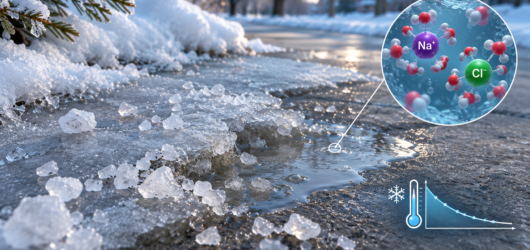
Why Does Road Salt Melt Ice—and Why Does It Stop Working in Extreme Cold?
Learn how road salt creates brine, why freezing-point depression works, the difference between 15°F and −6°F, and the environmental tradeoffs.
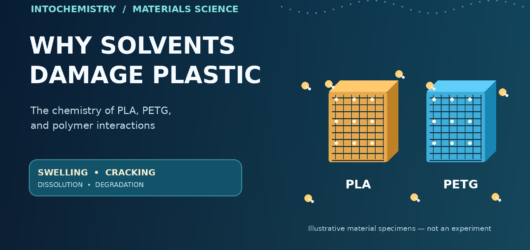
Why Do Solvents Damage Plastic? The Chemistry of PLA, PETG, and Polymer Degradation
Why do solvents swell, crack or dissolve plastics? Explore PLA and PETG chemistry, research-tested exposure conditions, and safer material choices.
Why General Chemistry Students Struggle With Math—and How Readiness Support Can Help
What research says about math readiness in General Chemistry I and II—and how targeted diagnostics, accessible lessons, and just-in-time practice…
50 More MCAT-Style Chemistry Practice Questions — Set 2
50 new, original MCAT-style General and Organic Chemistry practice questions: six experimental passages, 20 independent items, automatic raw scoring, and…
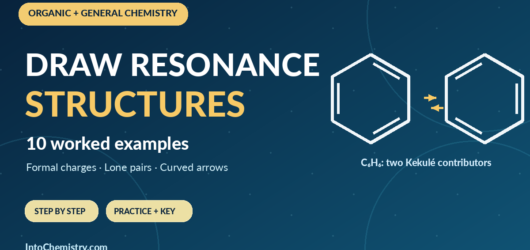
How to Draw Resonance Structures: 10 Worked Examples
Learn to draw resonance structures with formal charges, curved-arrow rules, 10 illustrated examples, major contributor tips, practice questions, and answers.
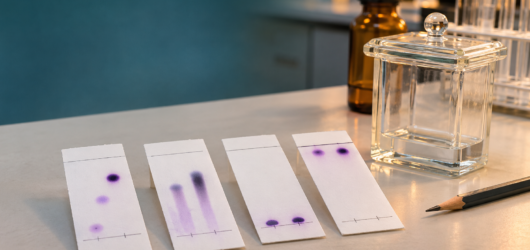
TLC Troubleshooting: 7 Common Thin-Layer Chromatography Mistakes (and How to Fix Them)
TLC streaking, low or high Rf values, uneven fronts, blank plates and measurement errors explained with 3 original diagrams, a…
50 Free MCAT-Style Chemistry Practice Questions (General & Organic)
50 original free MCAT-style General and Organic Chemistry questions: 25 per subject, six experimental passages, answer-hidden practice, scoring and explanations.
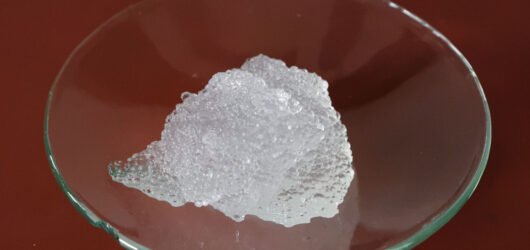
Smart Polymers Explained: The Chemistry of Materials That Respond to Their Environment
How do smart polymers respond to temperature, pH and damage? Explore PNIPAM, hydrogels, shape-memory materials, peer-reviewed research, real photos and…
Looking for your textbook chapter?
The course-and-chapter guides are the place for studying assigned readings. For practice activities, use the Learning Center. The blog remains focused on chemistry stories, applications, and helpful explanations.